
WELCOME BONUS 300%
UP TO €2000 + 100
FREE SPINS
UP TO €2000 + 100
FREE SPINS
Home → Games
Casino games at Monro Casino
La Partage applies only to even money bets
Craps Free Odds in Pass Line mode with 3-4-5x multipliers offer a combined house edge of just 0.37%, which is the lowest risk profile available for high rollers seeking mathematical precision. This specific configuration yields a 99.63% return-to-player rate when combining the base pass line wager with the additional odds bets placed after the point is established.
The true odds payout structure ensures zero house advantage on the odds portion itself, paying 2:1 for points 4 or 10, 3:2 for points 5 or 9, and 6:5 for points 6 or 8. This mechanism stands in stark contrast to side bets like Baccarat Tie, which carries a steep 4.84% house edge despite its attractive 9:1 payout ratio for successful predictions.
High rollers must distinguish between even-money concepts and actual table games, as La Partage is not offered here; instead, players face standard European rules where losing even-money bets forfeit the entire stake without partial recovery options available elsewhere.
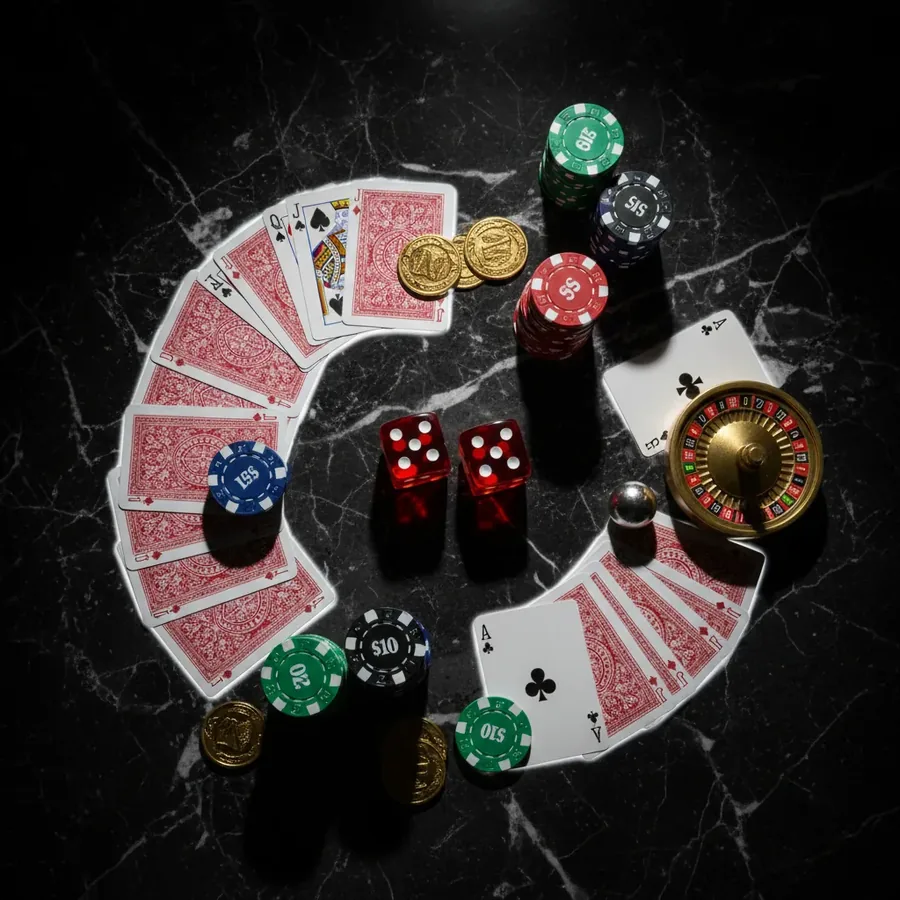
Baccarat in three steps: bet, reveal, compare
Banker bets using eight decks with a 5% commission provide the most efficient path for high rollers, delivering a 98.94% RTP and a minimal 1.06% house edge due to the drawing rule advantages. The effective payout of 0.95:1 compensates for the banker's statistical superiority, making this the optimal choice for players prioritizing capital preservation over volatile outcomes.
Straight 35:1 Instead of 36:1: Where House Edge Originates
The standard roulette payout for a single number is 35 to 1, which appears generous but actually embeds the casino's mathematical advantage. This specific ratio creates a house edge of approximately 2.70 percent on European wheels and 5.26 percent on American versions with an extra zero. High rollers betting large sums on these numbers must account for this built-in loss over thousands of spins to manage their bankroll effectively.
The presence of the double zero in American roulette directly doubles the house edge compared to the single zero variant found in most high-limit rooms. While the single zero offers a 2.70 percent advantage, the additional green pocket shifts the odds to favor the house by 5.26 percent. This significant difference means that a player risking $10,000 per hour will lose roughly $526 instead of $270 on average.
Video Poker Jacks or Better 9/6 tables offer a much more favorable environment for strategic players seeking positive expected value scenarios. This full pay table delivers an RTP of 99.54 percent, resulting in a minimal house edge of just 0.46 percent when optimal strategy is applied. Players using maximum bets of five coins can unlock the top Royal Flush bonus of 4000 credits, significantly boosting potential returns.
Why the Double Zero Almost Doubles the House Edge
The American roulette wheel features both a single zero and a double zero, creating 38 possible outcomes instead of the 37 found on European wheels. This structural change increases the house edge from 2.70 percent to 5.26 percent, nearly doubling the cost of play for every wager placed. High volume players must recognize that this extra pocket fundamentally alters the long-term profitability of their betting strategies.
Blackjack rules regarding dealer soft hands also impact the overall house edge, with hitting on soft 17 adding 0.22 percentage points to the casino's advantage. In contrast, standing on soft 17 reduces the edge, making games with S17 rules preferable for serious players analyzing mathematical expectations. These subtle rule variations compound over time, affecting the total return rate for high-stakes participants significantly.
Baccarat Banker bets remain the statistically superior choice despite the standard 5 percent commission applied to all winning wagers. The house edge on this bet is only 1.06 percent, making it one of the lowest risk options available in any casino setting. High rollers prioritizing bankroll preservation should focus their main stakes on this outcome rather than chasing higher payouts with worse odds.
The Baccarat Tie side bet offers an attractive 9 to 1 payout but carries a devastating house edge of 4.84 percent. Although online platforms often increase this payout from the traditional 8 to 1, it remains significantly worse than the primary Player or Banker wagers. Savvy players avoid this trap entirely, recognizing that the enhanced reward does not compensate for the drastically reduced probability of success.
Soft 17: the Ace counts 11 or 1
In Blackjack, a Soft 17 hand contains an Ace counted as 11 plus a six, allowing the player flexibility without immediate bust risk. Games requiring the dealer to hit on Soft 17 increase the house edge by 0.22 percent compared to those where the dealer stands. This rule variation is critical for high rollers calculating the true cost of their sessions across different table selections.
Splitting pairs in Blackjack transforms one initial hand into two separate hands, each requiring an additional bet equal to the original stake. Allowing resplitting of Aces improves the player's RTP by 0.08 percent, while permitting doubling after split adds another 0.14 percent advantage. These rule modifiers are essential components in determining whether a specific Blackjack table offers favorable conditions for skilled players.
Casino Hold'em Ante Plus Call offers a unique betting structure with a 99.18 percent RTP under standard rules for experienced participants. The game requires an initial Ante bet followed by a Call bet worth twice the Ante after seeing the flop cards. Players must navigate the specific payout schedule, including 100 to 1 for a Royal Flush, to maximize their theoretical return over extended play sessions.
The Video Poker Deuces Wild Full Pay table provides a rare opportunity for players to achieve a positive expected value of 100.76 percent. This exceptional RTP is only attainable when executing flawless optimal strategy with maximum coin bets, turning the house edge negative at minus 0.76 percent. Any deviation from perfect play immediately drops the return below 100 percent, demanding intense concentration from high rollers.
Game categories at a glance
| Category | Examples | Stakes From | Highlight |
|---|---|---|---|
| Slots | Book of Demi Gods 2, Esqueleto Explosivo 2, Legend of Cleopatra Megaways | 0,10 EUR | thousands of titles |
| Table games | Roulette, Blackjack, Baccarat | 0,50 EUR | classic rules |
| Live casino | XXXtreme Lightning Roulette, Blaze Roulette | 0,20 EUR | real dealers |
| Jackpot games | Mega Moolah, Divine Fortune, Age of the Gods | 0,20 EUR | progressive pools |
| Instant games | Aviator, Plinko, Mines | 0,10 EUR | fast rounds |
| Video poker | Jacks or Better, Deuces Wild | 0,25 EUR | strategy based |
Dozen 2:1: Twelve Numbers, One Third Coverage
Roulette Dozen bets cover twelve numbers and pay 2:1, which aligns with the true odds of approximately 2.083 to one. This payout structure creates a house edge of 2.70% on European wheels featuring a single zero sector. High rollers often use this wager for its balanced risk profile compared to straight-up bets. The variance remains moderate, allowing for sustained play sessions without excessive bankroll depletion.
The mathematical expectation for a 1 EUR stake is a loss of 0.027 EUR per spin due to the green zero. This edge is identical across all outside bets, including red/black and odd/even options in standard rules. Players seeking higher payouts must accept lower probabilities, as the dozen covers exactly one-third of the wheel. The consistency of this edge makes it predictable for long-term strategy analysis and bankroll management.
With an initial bankroll of 200 EUR, a player making 1 EUR dozen bets can expect roughly 7,400 spins before ruin. This duration assumes no variance deviation and relies on the law of large numbers holding true over time. The 2:1 payout allows for quick recovery of small losses during winning streaks. However, the negative expected value ensures that the casino retains its statistical advantage regardless of short-term results.
En Prison on Zero Gives Second Chance
The En Prison rule applies to even-money outside bets when the ball lands on zero in European roulette variants. Instead of losing the entire stake, the bet remains imprisoned for the next spin, offering a second chance to win. This rule effectively halves the house edge from 2.70% to 1.35% for those specific wagers. It significantly benefits high rollers who place large sums on red or black outcomes during volatile sessions.
Statistical models show that the imprisonment feature reduces the casino's advantage by exactly half for affected bets. Without this rule, the player loses immediately upon hitting zero, increasing the volatility of the gaming session. The option transforms a total loss into a conditional continuation, altering the probability distribution of outcomes. Players utilizing this rule can extend their playing time and reduce the overall cost of entertainment.
Comparing standard European roulette to French tables with En Prison reveals a substantial difference in long-term returns. The 1.35% edge allows for more strategic betting patterns compared to the harsher 2.70% disadvantage. High stakes players appreciate this nuance as it protects larger capital commitments from immediate erosion. The rule requires careful tracking of imprisoned bets, adding a layer of complexity to table management.
Straight 35:1 Against the Chance of 1 in 37
A straight bet in European roulette pays 35:1 but carries a winning probability of only 1 in 37. This discrepancy generates a house edge of 2.70%, meaning the casino retains 2.70% of every wagered euro over time. The payout is fixed regardless of previous spins, as each event is independent and random. High rollers may find the low hit rate challenging despite the attractive potential return on investment.
The expected value of a 1 EUR straight bet is -0.027 EUR, reflecting the built-in mathematical disadvantage. While the 35:1 payout seems generous, it does not compensate for the high frequency of losing outcomes. Volatility is extremely high, causing significant swings in bankroll size during short playing periods. Players must possess sufficient capital to withstand these fluctuations without deviating from their predetermined limits.
Contrasting straight bets with dozen bets highlights the trade-off between risk and reward in roulette strategies. The dozen offers a higher win frequency but lower individual payouts, resulting in steadier gameplay. Straight bets provide excitement through rare but substantial wins, appealing to those seeking adrenaline-fueled experiences. Understanding this dynamic helps players select wagers that align with their personal risk tolerance levels.
Bankroll for 200 Rounds at 1 EUR
Maintaining a bankroll of 200 EUR allows a player to execute 200 rounds of 1 EUR bets in roulette. This amount provides a buffer against normal variance, reducing the probability of premature bankruptcy during a session. Statistical simulations indicate that such a bankroll can sustain play for several hours depending on the chosen betting strategy. High rollers often allocate larger sums to accommodate higher stakes and longer gaming durations.
The risk of ruin for this bankroll varies significantly based on the type of wagers placed. Even-money bets offer greater stability, while single-number bets increase the likelihood of rapid fund depletion. Calculating the required bankroll involves considering the desired confidence level and acceptable loss thresholds. Proper bankroll management ensures that players can continue participating without financial distress after inevitable losing streaks.
Tracking performance over 200 rounds reveals how the house edge gradually erodes the initial deposit. With a 2.70% edge, the expected loss after 200 spins is approximately 5.40 EUR. This figure demonstrates the cumulative impact of mathematical disadvantage over repeated trials. Players should view such losses as the cost of entertainment rather than a failure of strategy.
37 vs. 38 Sectors: One Zero Difference
European roulette features 37 sectors, including numbers one through thirty-six and a single green zero. American roulette expands this to 38 sectors by adding a double zero, which increases the house edge substantially. The additional pocket shifts the probability of winning any given bet, favoring the casino more aggressively. High rollers prefer European tables for their superior odds and lower mathematical disadvantage.
The presence of two zeros in American versions raises the house edge to 5.26% on most bets. This nearly doubles the cost of play compared to the 2.70% edge found on single-zero wheels. The difference becomes particularly pronounced over large volumes of spins, impacting long-term profitability for players. Choosing the correct variant is crucial for minimizing losses and maximizing potential returns.
Analyzing the sector count reveals why game selection matters in online casino environments. Tables with fewer pockets generally offer better payout structures and reduced volatility for the player. The single zero configuration allows for more favorable betting options like La Partage or En Prison. Savvy gamblers prioritize these rulesets to gain a slight edge in an otherwise negative expectation game.
Contact
Live - online chat
Banking




Providers











Monro Casino 2026